Choose a relevant vessel
Start with the vessel page and tell us what kind of group, route and occasion you are planning.
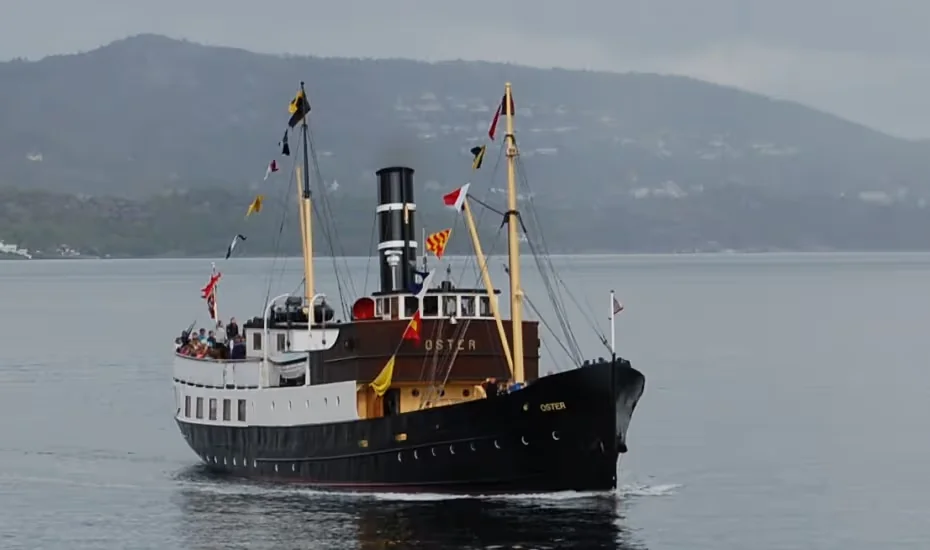
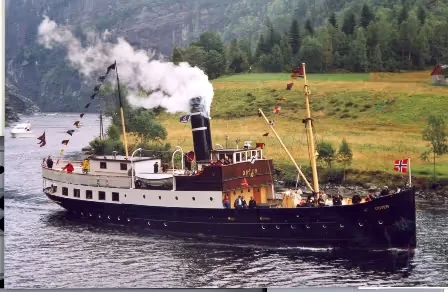
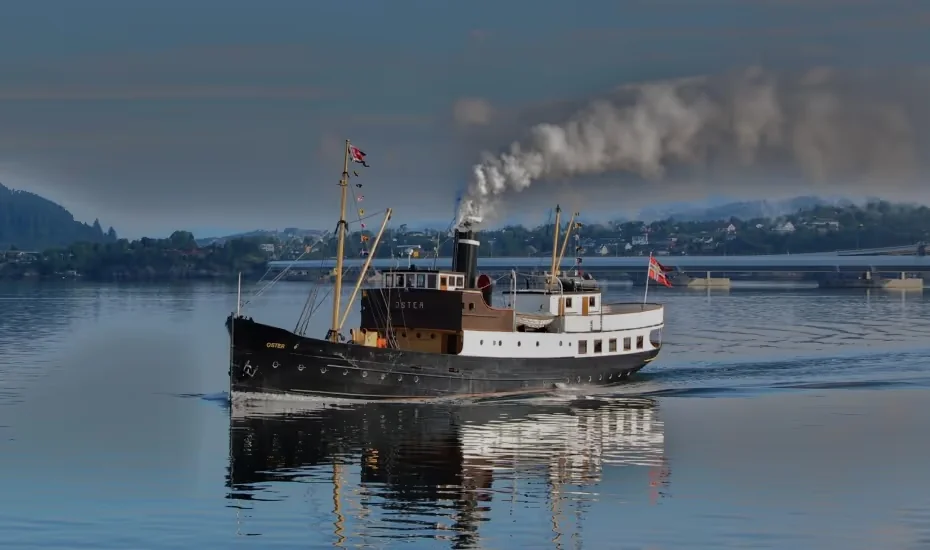
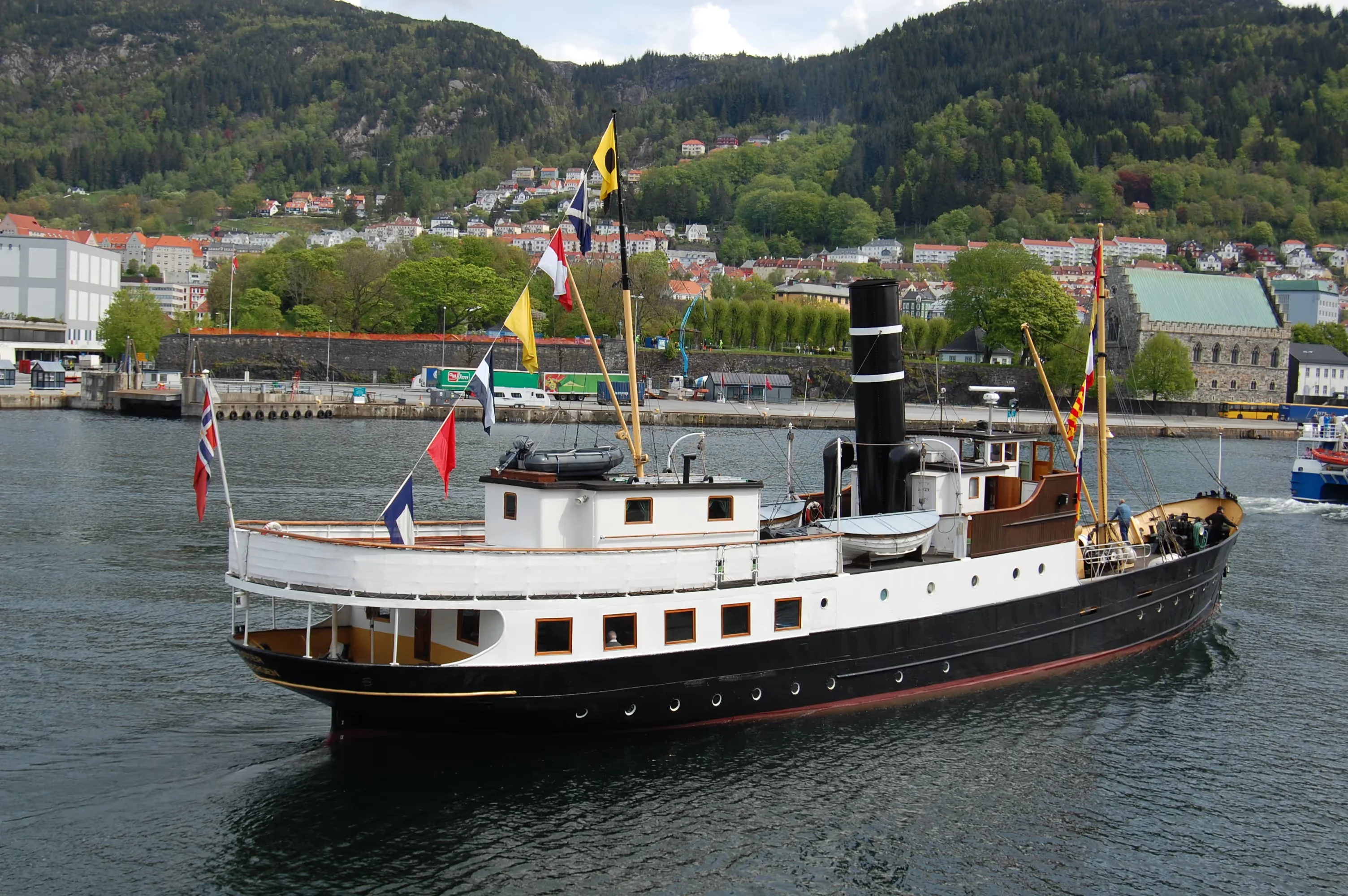
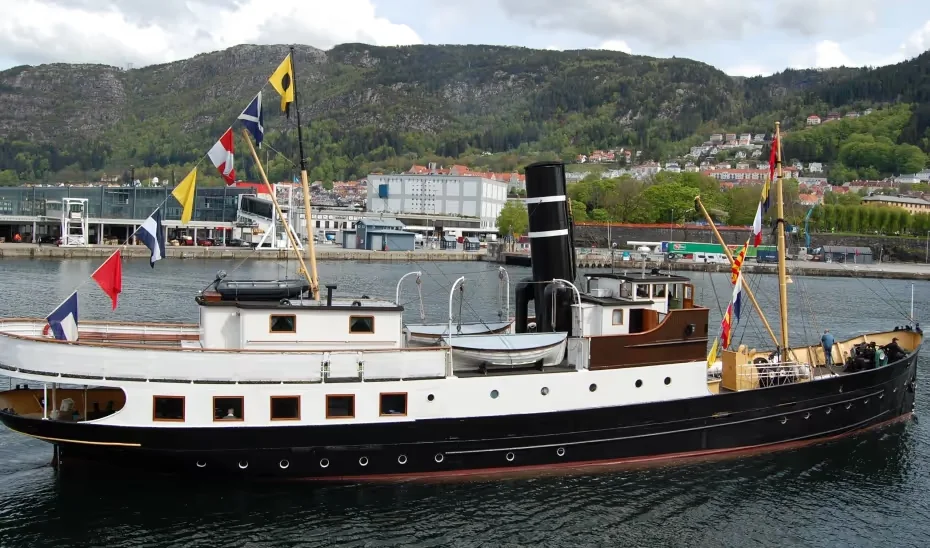
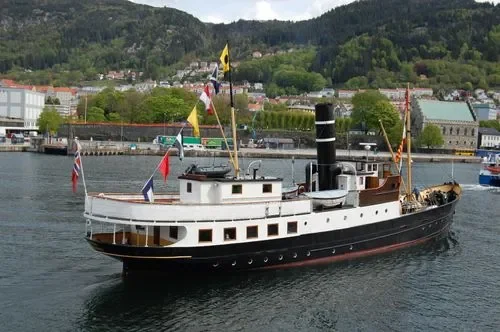
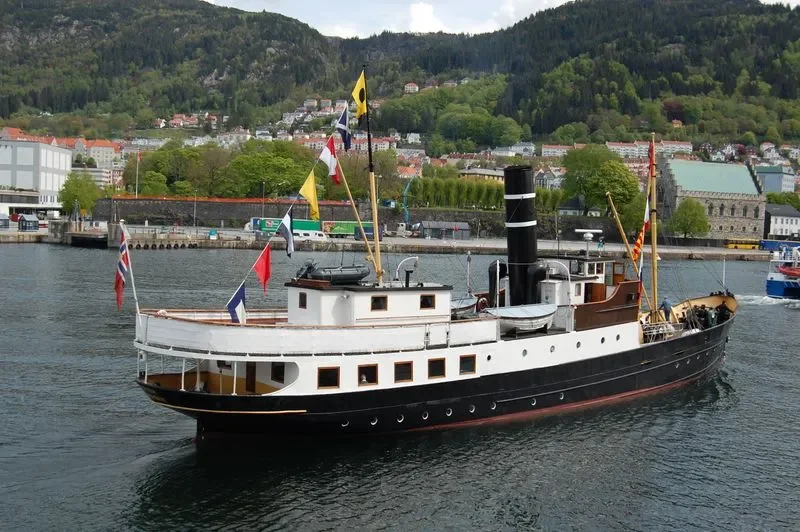
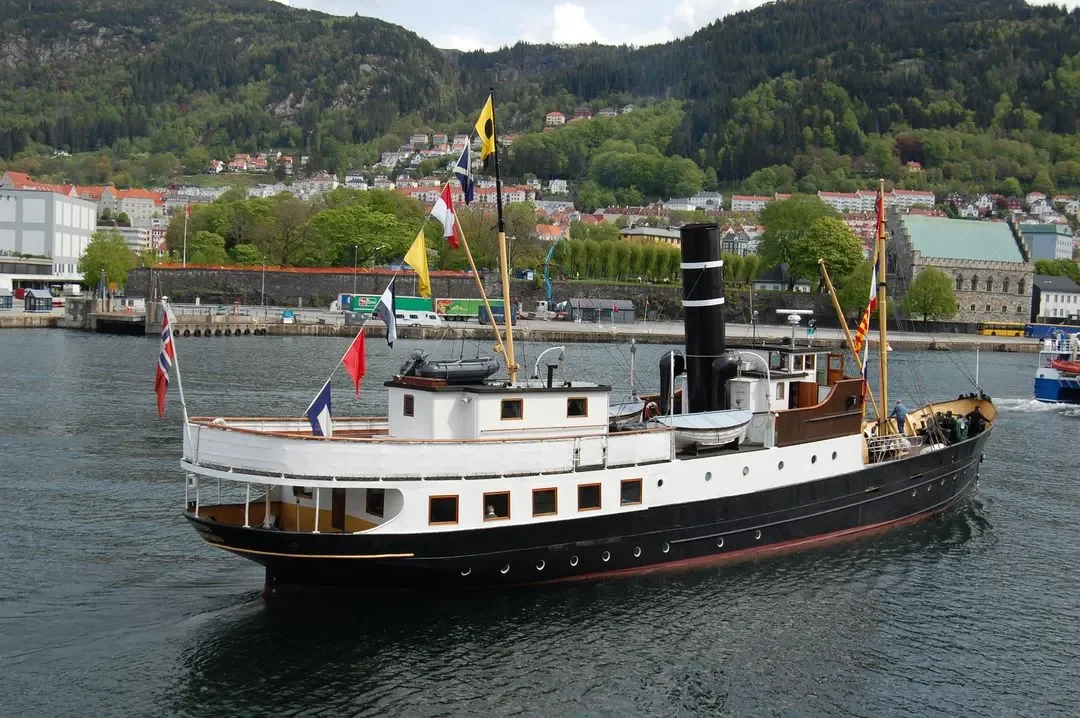
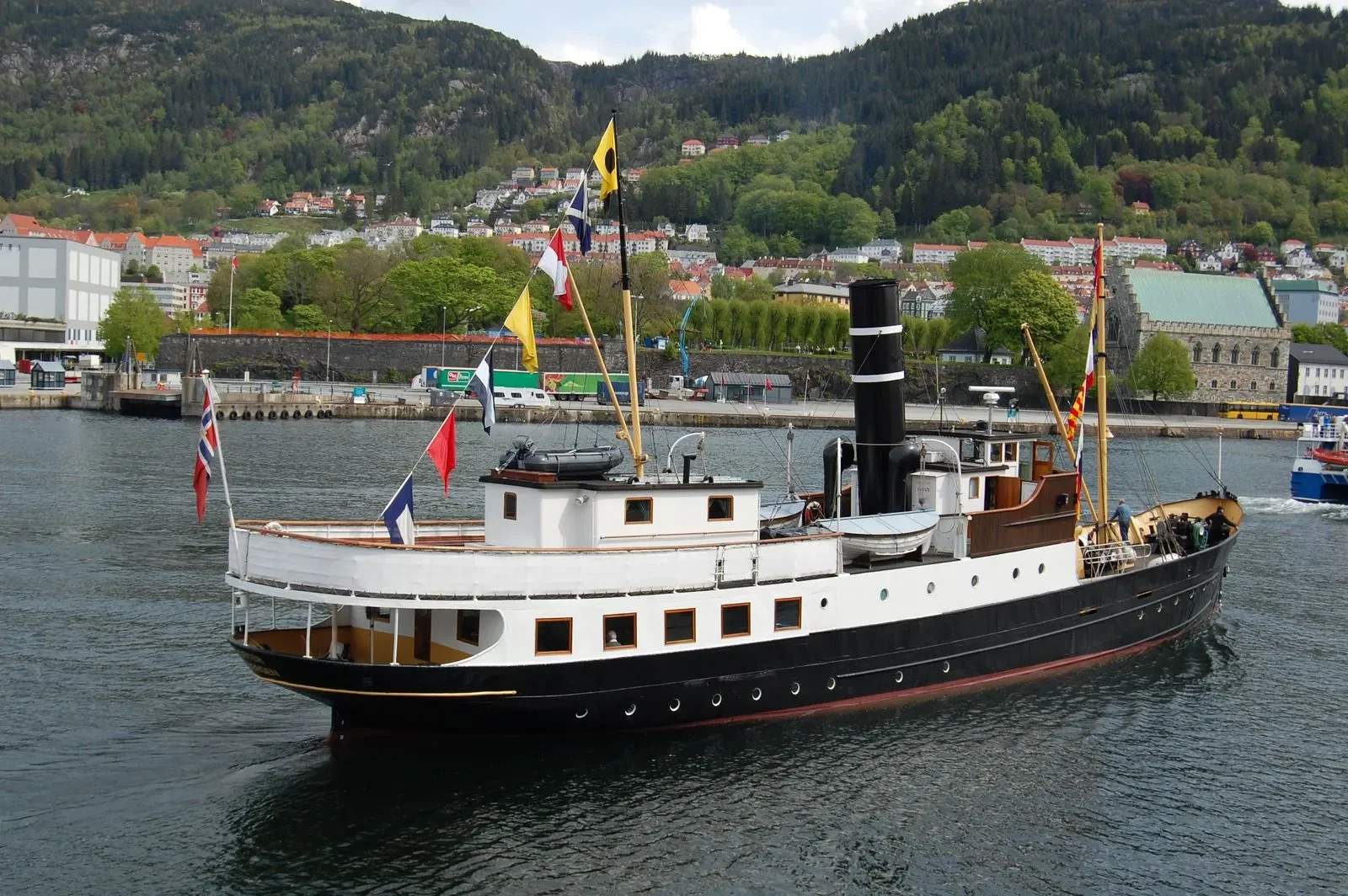
DS Oster is a well-kept heritage vessel with a lot of history. From trips in the Osterfjorden at the beginning of the 20th century, a warship during the war to the time as a heritage vessel today, this is a ship that has been through a lot.
DS Oster is a well-kept heritage vessel with a lot of history. From trips in the Osterfjorden at the beginning of the 20th century, a warship during the war to the time as a heritage vessel today, this is a ship that has been through a lot. The boat is also particularly known as Gamle Dampen from the folk song of Ivar Medaas.
DS Oster is today a fully restored veteran with good facilities.
In 1906, Modalen municipality sent a request to the board of Indre Nordhordlandske Dampskibsselskab to build a new liner that could ford the ice that otherwise left the municipality in winter isolation. The board of INDS made a decision the following year to build a boat with a powerful engine and a strong hull. It was Christianssand's Mekaniske Værksted that was commissioned to build the boat at the beginning of 1908.
November 1908 the boat was delivered, and it was named DS "Oster". The boat's qualities as an icebreaker met all the expectations people had. The first captain was Tobias Andersen Hordvik, born in 1867, who had served as captain from the age of 19. He continued as captain at Oster until his retirement in 1930.
D/S "OSTER" was requisitioned by the Norwegian Navy in September 1939. She was fitted with a 76 mm cannon on the foredeck. She had a crew of 18 men, under the command of Captain L. Sommer and was under the 2nd naval district, 13 guard division. On 9 January 1940, under the command of Reidar Fladmark, she was badly damaged in a collision with DS Ek, but was able to return to Bergen on her own machine.
On the evening of 8 April 1940, she was ordered to patrol in the southern part of Hjeltefjorden, between Ramsøy and Kalvanes. She was then ordered to Blomvåg in an intelligence and liaison function. On 6 May she was sailed to Telavåg, the command was disbanded by the navy, and the boat was abandoned.
Die Deutsche Kriegsmarine found Oster on 22 May 1940 in Telavåg and requisitioned it. Oster retained her original 76mm gun, was painted grey, and entered service on 24 May 1940 with tactical number “NB04” (Hafenschutz-Flotille, Norwegen Bergen) and renamed MARDER. (Marder means Mårcat in High German, and "Tjuvradd" in Folk German)
In the period up to December 1940, she went through a conversion, probably fitted with Flak guns, as the boat was later also used as a floating "Aircraft gun" when needed. MARDER was then mainly on patrol duty for the Hafenschutz-Flotille Bergen until the spring of 1944.
MARDER runs aground on 17 January at Kjeøfluen on the east side of Hjelma by Alvø, a small island south of Fedje. Here she stood for five days before she was towed back to Bergen on 22 January and repaired at Evje & Andersen's Slipp at the shipyard.
On 5 June 1941, MARDER rescues the crew from an emergency landing German flying boat, and takes it in tow. The flying boat was later handed over to the Luftwaffe.
On 5 June 1943, Marder responded to an attack by two Norwegian MTBs at ALTENFELS, which was transporting iron ore from Kirkenes to Germany. MTB 626 with Ltn. Bøgeberg hit ALTENFELS with two torpedoes, and ALTENFELS began to sink. Marder tried to pursue, but due to bad weather the MTBs escape to the base in Scotland. On board there were two killed and five wounded.
During the spring of 1944, the boat was modified, the stern and front mast were removed and a new "Unit Mast" was mounted on the bridge. This was to make room for a firing range for a 37 mm cannon which was mounted on a platform between the bridge and the 76 mm cannon on the foredeck. Stands for sink mines were also installed.
In May 1944, MARDER was completely rebuilt, and was seen in service in 55 Vorposten-Flotille with a new tactical number, V5504, and based in "Stutzpunkt Florvaagbucht", the headquarters of 55 Vorposten-Flotille.
After the Germans gave up the occupation of Norway, they left the boat in Telavåg. During the war, the boat was heavily used and poorly maintained. It was not a pleasant sight that greeted INDL when they were again to take over the boat.
When the occupation ended, DS Oster was once again put into passenger service. Due to the war wear and lack of maintenance on the German side, the boat was repaired and partially rebuilt at Storemøllens Mekaniske Verksted in Bergen. Among other things, she got a new bridge and captain's cabin.
In 1964, Oster's passenger certificate expired. The boat had now become Norway's last coal-fired local boat and it was not practical to renew the certificate. It was discussed to preserve the boat as a heritage vessel even then. The price of NOK 50,000 was unfortunately too high for conservation interests.
It was in this connection that Ivar Medaas wrote the melody for the poem "Dar kjem Dampen" written ten years earlier in 1953.
In April 1964, Oster was sold to Berge Sag & Trelastforretning / v. Br. Berge in Ølensvåg in Sunnhordland to be converted into a cargo vessel by the owner himself. In Ølensvåg, the steam engine was dismantled and a 300 bhp Caterpillar diesel engine from the condemned snuffer "Bjørkevær" was installed. Most of the superstructure was dismantled, only the aft part with the boat deck was retained.
On top of this, a used wheelhouse was mounted. Midships, the boat got cargo space, and forward a new rig with an unloading boom. As MS Vaka, the freighter then entered coastal shipping in 1966.
In June 1974, Vaka was sold on to Oddmund Tjoflot, Vikebygd in Sunnhordland, who used it in local sand shipping in Southwestern Norway. In August 1988 it was sold on to the shipping company Kristoffersen & Gundersen / v. Thor Åge Kristoffersen, Flekkerøy near Kristiansand. This shipping company used the ship in coastal shipping, -typically with cement in sacks.
At this time, Vaka was one of several very old freighters sailing along the Norwegian coast. The slender hull lines still revealed the past as a liner.
The National Antiquities Agency gave the boat the status of a protected ship and restoration and return to the way she looked in 1964 began. On the basis of the original inventory and historical documentation, she was to be rebuilt.
After 30 years as MS "Vaka", the boat was bought by enthusiasts in the Nordhordland Heritage Vessel Association. The plan was to restore the boat back to its original state with a steam engine. The boat was named Gamle Oster. The boat was then put into storage in Bjørsvik.
The boat went through a major refit, and got a steam engine again.
On 1 August, she was renamed OSTER and Brit Kari Andersen swung the bottle elegantly towards the bow so the homebrew splashed in all directions. The old steamer acknowledged with a half-minute long howl in the old steamer whistle.
Despite the fact that the ship was only technically and externally ready, it was a moving homecoming at Vågen in Bergen for Oster under Nordsteam where around 40,000 had turned up. After this eventful day, OSTER went to Bjørsvik for winter storage.
On 11 June 2005, Oster was solemnly declared fully restored at a ceremony in Bergen. The ceremony took place at "Skur 11", the same place where the liner had previously docked.
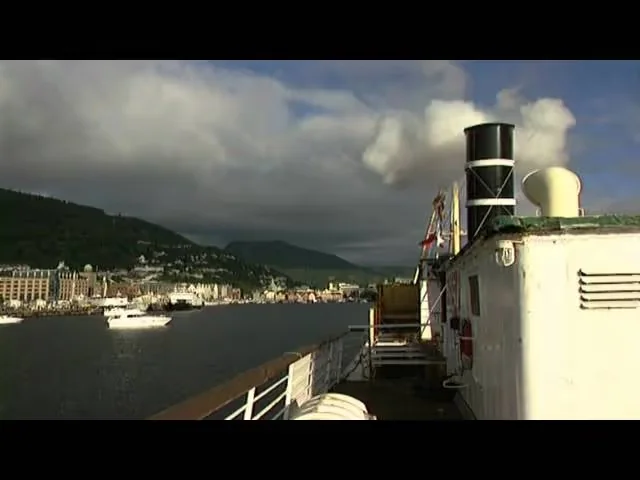
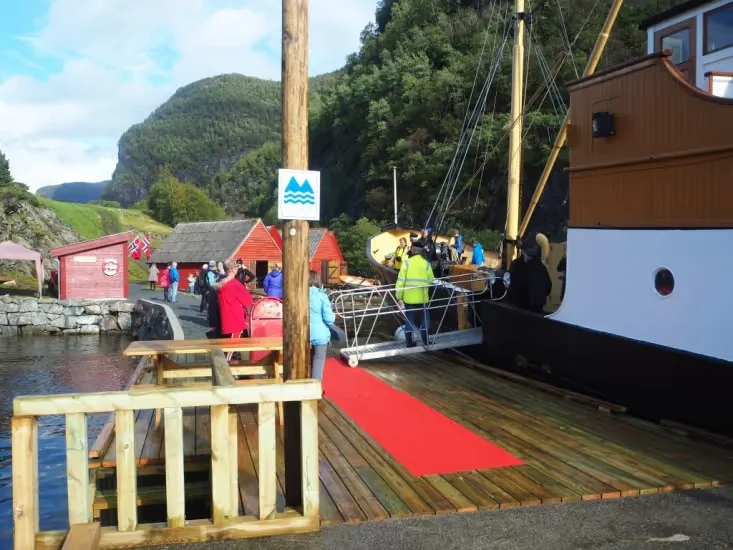
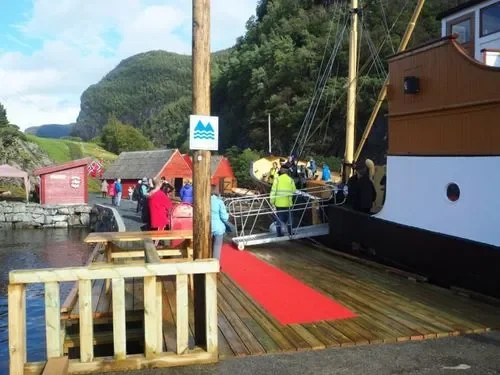
Today, Oster is a well-known veteran in the fjords around Bergen. It is possible to rent the boat for all kinds of trips. Contact us to arrange your event.
A calm, clear process from first enquiry to a tailored maritime experience.
Start with the vessel page and tell us what kind of group, route and occasion you are planning.
Share your preferred date, guest count and any wishes for food, route or programme.
We clarify availability with the vessel and assess what setup fits your plan best.
You get a non-binding recommendation with practical next steps and a price indication.